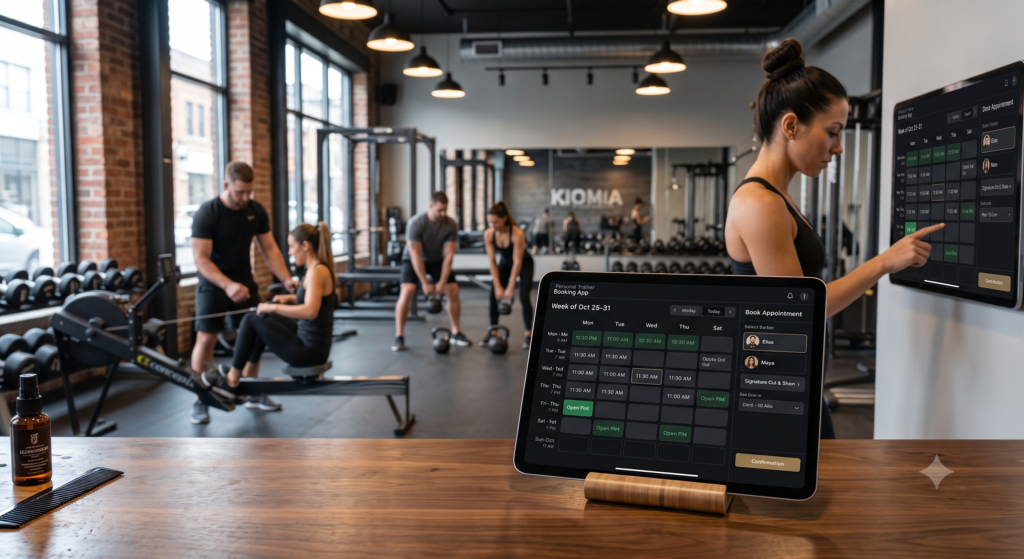
Nutrition counseling is personal in a way that makes booking friction especially costly — a clunky phone-and-voicemail process adds an unnecessary barrier for clients already hesitant to discuss eating habits or health struggles. Most nutrition practices also run solo or with a small team, without dedicated admin staff to manage a calendar by hand. Here’s how the best scheduling software for nutritionists and dietitians compares in 2026.
What Nutritionists and Dietitians Need From Scheduling Software
Telehealth-ready booking — virtual consultations have become standard expectations in nutrition counseling specifically, so automatic video link generation at booking matters more here than in in-person-only businesses.
Recurring follow-up scheduling — consistent session frequency is directly linked to better outcomes in nutrition counseling; software that makes rebooking a follow-up frictionless helps clients stay on track rather than falling off between appointments.
Intake forms for health history — collecting dietary habits, health conditions, and goals before a first session saves time and lets the practitioner prepare.
Payment at booking — for solo practitioners without front-desk staff, collecting payment automatically at the time of scheduling removes a manual billing step.
Why Recurring Scheduling Actually Affects Outcomes Here
This isn’t just an admin convenience — consistent session frequency is directly linked to better dietary adherence and measurable health outcomes in nutrition counseling specifically. A client who has to actively re-book each follow-up (rather than having a standing recurring slot or an easy one-click rebook) is more likely to let weeks slip between sessions, which correlates with worse adherence to whatever plan was set. This is part of why the rebooking friction that a clunky scheduler creates isn’t just lost revenue for the practitioner — it measurably affects client results, which is a stronger case for investing in decent scheduling software here than in a purely administrative business.
Medical Nutrition Therapy Billing Adds Complexity General Tools Don’t Handle
Registered dietitians who bill insurance for Medical Nutrition Therapy (MNT) face a layer of complexity that a general scheduler like Calendly or Square Appointments simply wasn’t built for — CPT code tracking, prior authorization requirements that vary by insurer, and documentation tied to specific billable codes per visit. Neither general tool covered here integrates with insurance billing workflows in any meaningful way. For an RD who bills insurance regularly, this is often the deciding factor that pushes toward a nutrition-specific platform (Practice Better and NutriAdmin both offer some billing integration) rather than pairing a general scheduler with separate billing software, since keeping appointment records and billing codes in sync manually across two systems creates real room for costly documentation errors.
For practitioners running group programs — a 6-week weight management cohort, or a recurring “nutrition challenge” — capacity-limited group booking (supported natively on Square Appointments and, with more flexibility, on nutrition-specific platforms) becomes relevant in a way it isn’t for typical one-on-one consulting. General tools handle this adequately for a single group cohort, but tracking multiple concurrent cohorts with different start dates tends to strain a purely general scheduler.
Best General Scheduling Tools Compared
Calendly — Best for a Fast, Professional Booking Link
Calendly is a recognized, reliable choice for nutritionists who want a dead-simple booking experience without managing a broader practice system. Its free plan (one event type, one calendar) works for a solo practitioner with a single consultation format; the Standard plan ($10/seat/month annual) unlocks unlimited event types — useful for separating “initial consultation” from “follow-up session” — plus Stripe payment collection and custom intake questions. Its main limitation for this use case: it’s scheduling only, with no meal-planning, charting, or broader client management built in.
Best for: nutritionists who want a clean, professional booking link and are comfortable using separate tools for meal planning and client records.
Visit Calendly
Square Appointments — Best for Practitioners Already Using Square for Payments
For nutritionists already using Square for payment processing, Square Appointments keeps scheduling and billing in the same ecosystem. The Free plan covers one practitioner and one location with standard Square processing rates (~2.6% + 15¢ in person). Multi-practitioner practices need the Plus plan at $49/month per location.
Best for: solo or small nutrition practices already invoicing through Square.
Visit Square Appointments
A Note on Nutrition-Specific Practice Platforms
General scheduling tools don’t include meal planning, nutrient tracking, or clinical charting — the core deliverables for many nutrition practices. Dedicated platforms like Practice Better (scheduling, charting, packages, and a client portal, with tiers from free for a small number of active clients up to around $155/month for a team), NutriAdmin (intake forms, scheduling, and basic meal planning around $39/month), and Nutrium serve this gap directly. Some practitioners combine a general scheduler with a separate specialized meal-planning tool like Promealplan rather than paying for an all-in-one platform’s weaker meal-planning module — worth considering if scheduling is solid on a general tool but meal plan delivery is the actual bottleneck.
Pricing Comparison Table
| Tool | Type | Free Plan | Starting Price |
|---|---|---|---|
| Calendly | General scheduler | Yes — 1 event type, 1 calendar | $10/seat/mo (annual) |
| Square Appointments | General scheduler | Yes — 1 location, 1 staff | $49/mo (multi-staff) |
| Practice Better | Nutrition-specific practice management | Yes — up to 3 active clients | ~$69/mo (Professional tier) |
| NutriAdmin | Nutrition-specific practice management | No | ~$39/mo |
Which One Should You Choose?
Just need clean, simple booking and use separate tools for meal plans and records: Calendly’s free plan to start.
Already invoicing through Square: Square Appointments.
Want scheduling, charting, packages, and a client portal in one system: Practice Better or NutriAdmin, accepting the higher cost for the consolidation.
Meal planning is your main deliverable and bottleneck: pair a general scheduler with a dedicated tool like Promealplan rather than paying for an all-in-one platform’s weaker meal-planning module.
Frequently Asked Questions
Do I need a nutrition-specific platform, or is general scheduling software enough?
It depends on whether you need meal planning, nutrient tracking, or clinical charting in the same system. If you’re comfortable using separate tools for those, a general scheduler like Calendly is enough and considerably cheaper.
Can I collect health history before a first session?
Yes on both Calendly and Square Appointments, through custom intake questions — though nutrition-specific platforms typically offer more structured, health-focused intake templates.
Is telehealth built in?
Not natively on Calendly or Square Appointments — both generate video links through Zoom or Google Meet integration rather than built-in video. Some nutrition-specific platforms include telehealth natively.
What’s the cheapest way to combine scheduling and meal planning?
Pairing a free or low-cost general scheduler (Calendly’s free plan) with a dedicated meal-planning tool often costs less than an all-in-one platform, though it means managing two separate systems instead of one.
Running a different type of business? See our comparisons for personal trainers and massage therapists.